
Origins of the Spira Mirabilis symbol


Do you recall the Monty Python sketch where the Leader of The People’s Front of Judea asks his followers rhetorically:
“What have the Romans ever done for us?”
Frustratingly for the hapless orator, he gets too many ingenuous answers to his question ! It would be much the same thing if a scientific flunkey asked a group of mathematicians:
“What has the Fibonacci Series (below) ever done for us?”
0 : 1: 1 : 2 : 3 : 5 : 8 : 13 : 21 : 34 : 55 : 89 : 144 : 233 etc.
(You may notice that this mathematical Series is constructed by adding two consecutive terms together to get the next term. Hence 0 + 1 = 1; 1 + 1 = 2; 1 + 2 = 3; 2 + 3 = 5; and so on).
Well firstly, the Fibonacci Series gave us the Golden Ratio (or Divine Proportion) of 1.618 by placing one number of the series over its predecessor (e.g. 233 or 144)
144 89
As the numbers get higher, the Golden Ratio becomes more precise.

To construct a Spira Mirabilis, we can start with either a Golden Triangle or a Golden Rectangle, a such that a
- = 1.618
b

From there, the construction continues by adding Gnomons which are a portion of a geometric figure which is added such that the new figure is a larger (proportional) version of the original:

Shaded areas the gnomons. A gnomon is a principle of growth in Nature. This process is then continued, adding the circle segment at each stage to form a spiral.

Examples of Spirals in Nature Sunflower seeds are arranged in the spirals: 21 one way and 34 the other, or 34 and 55 spirals (all Fibonacci numbers).

The Nautilus Shell is also a spiral:

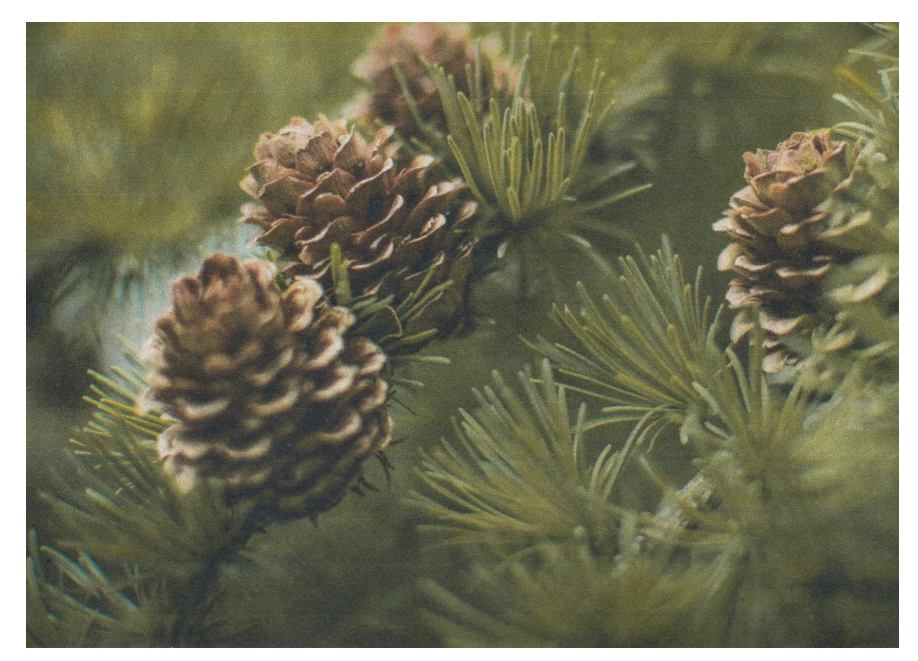
Pine cone spirals follow Fibonacci numbers:
Botany
Petals of numerous flowers are Fibonacci numbers. Check it out for yourself !
Architecture
The Golden Ratio has been used in architecture for thousands of years. In the 16th century, Andrea Palladio repopularised this proportion in his Renaissance architecture, and this natural elegance was later employed in the English Georgian style.
Dentistry
The Golden Ratio is used to achieve a ‘perfect smile’ in constructive dentistry, such that the foreteeth are in a golden ratio to each other (width to height).
There are many, many more examples of the Fibonacci Series in Nature and elsewhere - even in music.
Thanks, Fibbo! (circa 1170 - 1240). And thanks for helping to create the Spira Mirabilis which adorns our website, our first album cover (INSIGHTS), and symbolises our heartfelt connection to the Spirit of Nature.
Yasmine and Peter 2026


Comments